Warm Toes, Happy Life: Hydronic Infloor Heating
Nobody likes stepping onto a freezing floor on a January morning. Hydronic radiant heat warms your home quietly from the ground up, with no dusty, noisy air blowing around. Here’s how it works and what goes into a system that lasts decades.
CLICK ON THE MAGNIFYING GLASS 🔎 TO OPEN EACH TOPIC. CLICK ON THE ❌ ICON TO CLOSE.
The Anatomy of a Warm Floor
Think of a hydronic system like your body’s circulatory system: a loop of warm water that needs a few key players to keep it moving.
- The heat source (the heart): A boiler or heat pump that heats the water.
- The circulator (the pump): Pushes warm water through the tubing.
- The mixing valve (the blender): Your boiler makes water hot, but floors only need it warm. The mixing valve blends in cooler return water so you don’t cook your toes or crack your tile.
- The manifold (the traffic cop): Splits the flow and sends the right amount of warm water to each room or zone.
- Zone valves and thermostats: Let each area, like the basement, bathrooms or garage, run at its own temperature.
Choosing Your Boiler: Traditional vs. High-Efficiency
1. Conventional cast-iron or steel boilers
- The perk: Extremely durable (some last 30+ years) and can run floor heat and high-temperature radiators at the same time.
- The trade-off: Heavy, slower to warm up, and less efficient than modern condensing models.
2. Wall-mounted condensing boilers
- The perk: Compact, quick to respond, and efficient. Many modern models are rated around 95% AFUE or higher.
- The trade-off: They need a condensate drain, proper venting, and a technician who knows that specific brand.
From Our Job Files: A 6-Zone Bragg Creek Retrofit
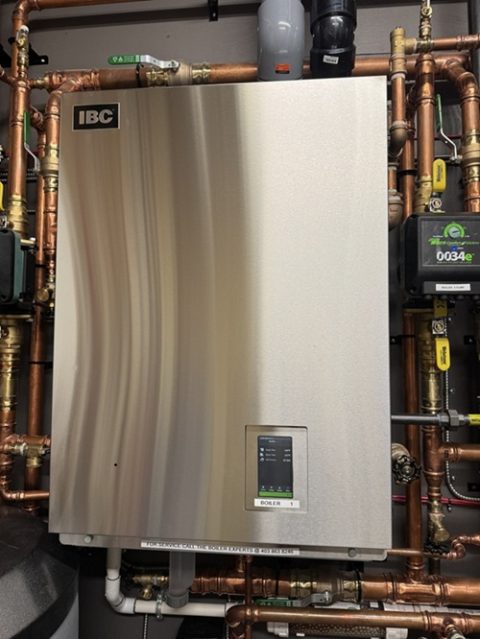
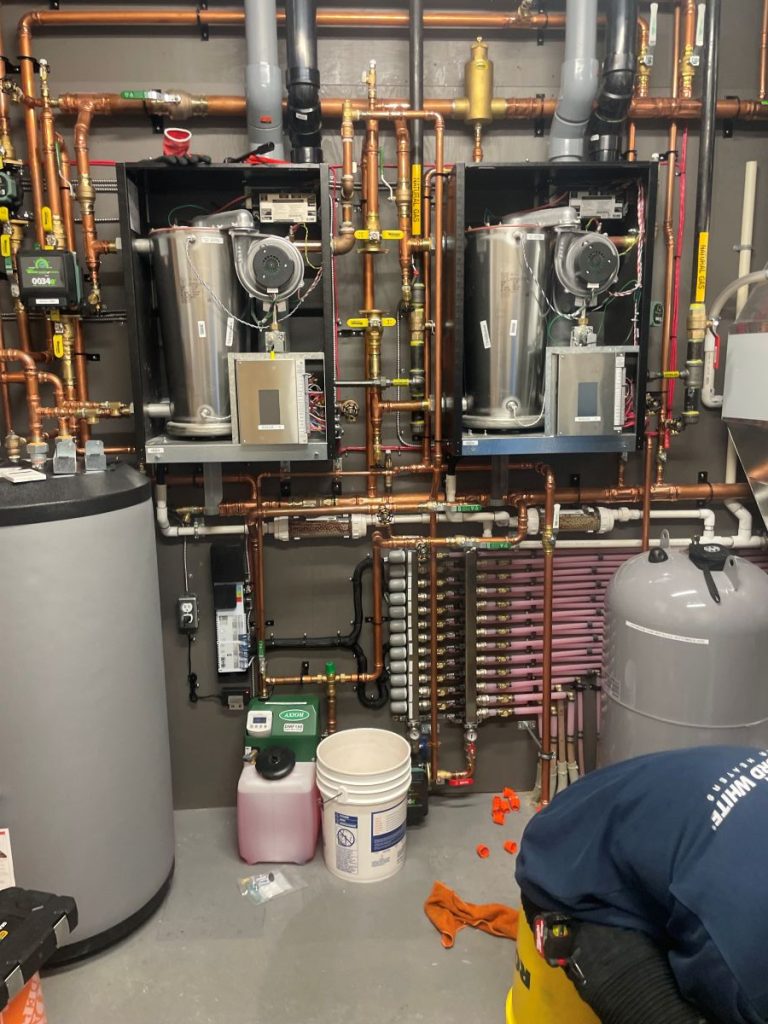
This full mechanical retrofit tied together two air handlers, two wall-mounted condensing boilers, an indirect hot water tank, six circulator pumps and 14 zone actuators. Together they heat six basement concrete infloor zones, forced air upstairs, wall-mounted radiators and all the domestic hot water.
It was logistically challenging, and exactly the kind of system we love to geek out on.
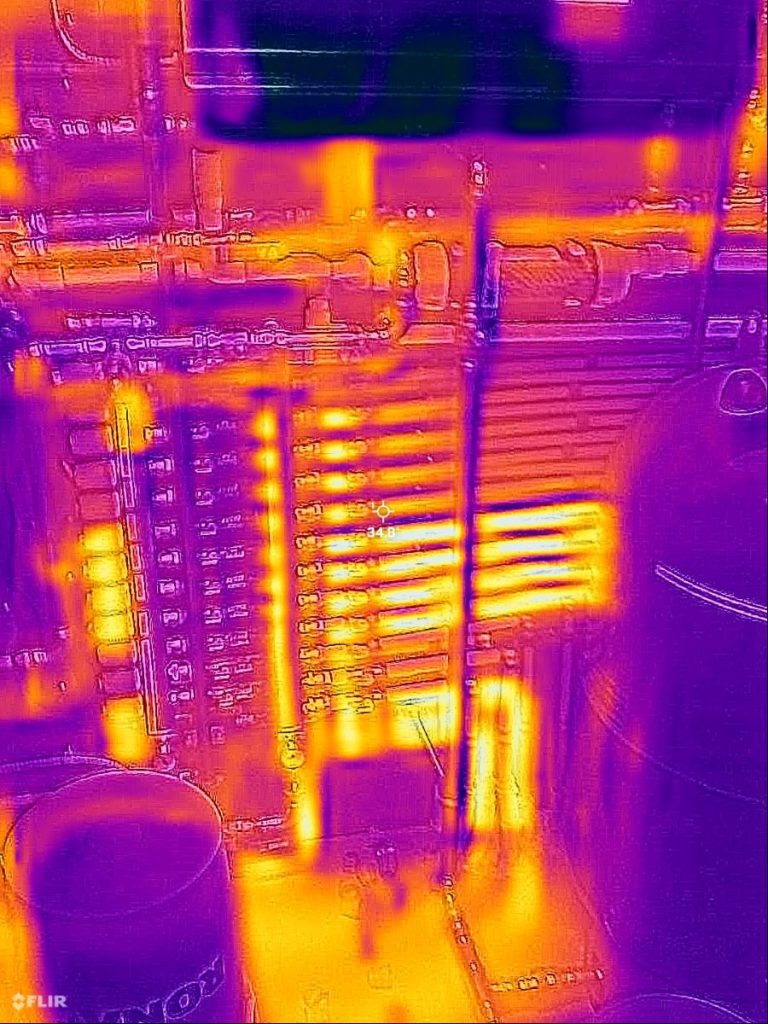
We use thermal imaging to confirm every loop is flowing and heating evenly before we hand the system back.
Maintenance: The Secret to a 30-Year System
- Book an annual boiler inspection and combustion check.
- Check system pressure and the expansion tank.
- Clear the condensate trap and drain on condensing boilers.
- Keep intake and exhaust vents clear of snow and ice.
- Listen for new noises from pumps or valves, an early warning sign.
Before you buy, make sure there’s a local pro who knows your brand inside and out. We’re always happy to talk about the Canadian-made systems we’ve come to trust.
Thinking about radiant heat?
We design, install, service and repair hydronic infloor systems across Calgary, Springbank and Bragg Creek, including locally made Canadian boilers we trust in our own homes.
Hydronic Heating Calgary FAQ
What is hydronic heating?
Hydronic heating warms your home by circulating hot water from a boiler through pipes in the floor, baseboards or radiators. It's quiet, even and comfortable, which is why it's popular in Calgary basements and custom homes.
Why is one zone of my in-floor heating cold?
Usually a failed zone valve or actuator, a thermostat or wiring fault, air trapped in the loop, or a circulator pump problem. We test each part of the zone to find the cause rather than guessing.
What is hydronic system balancing?
Balancing adjusts the flow through each loop so every room heats evenly, instead of some rooms running hot while others stay cold. It's often the fix after a renovation or when new zones are added.
Do you repair hydronic in-floor heating in Calgary?
Yes. We repair and service hydronic radiant floor heating, boilers, manifolds, zone valves, circulator pumps and controls across Calgary, Springbank and Bragg Creek. Call or text 403-619-2856, 24/7.
Hydronic or electric in-floor heating: which is better?
Hydronic suits whole homes and large areas like basements. Electric is simpler and cheaper to install for a single bathroom or kitchen. See our electric floor heating guide to compare.
What Calgary Customers Are Saying